Scroll to view the interactive Impact Report

Impact Report2023-2024

Introduction

Welcome to our 2023-2024 Impact Report which highlights the innovation and improvement projects that Health Innovation East Midlands has delivered during the year, working with our partners – from health and care systems, commercial innovators, research, and academia to charities and local communities, to name but a few.

After 10-years of delivering innovation programmes and support to the region, the past 12 months saw us begin a new five-year licence period under a new name as Health Innovation East Midlands (replacing our old name of East Midlands Academic Health Science Network).

We have continued to deliver high quality support, resources and programmes to our systems – many of which you can read more about in this report.

We also welcomed a new Independent Chair and Non-Executive Director to our Board - Professor Phil Baker and Glenn Crocker who continue to help us spread our reach in discovering, deploying and sustaining innovation across the region.

The strength of our organisation is our team, and during the year we undertook a staff survey - 86% of responses were positive with people referencing being trusted to do their job, having regular opportunities to contribute ideas that were valued, and our supportive culture and environment.

Over the past 12 months we have helped signpost dozens of transformational innovations and technologies to local NHS and healthcare organisations.

We have also built upon our close working with research organisations and universities – our aim is to create a ‘bench to bedside’ approach that takes the outputs of research programmes and supports their implementation, so they benefit more patients, faster.

As one of 15 Health Innovation Networks (HINs) across England, we work closely with our colleagues from the other regions. Our combined impacts are significant – for example during 2023-2024, together we enabled over £475m investment. We have more than 10 years of knowledge of how to successfully implement innovation so it ‘sticks’. We share this via Innovation Insights webinars, events, toolkits and resources, and we provide a range of expert services – keep up to date by checking out our website or signing up to our newsletters and social media channels.

I hope you enjoy reading our report. If you would like more details on any of the programmes, past or present, or about how we can support you, please do get in touch.

Nicole McGlennon

Managing Director, Health Innovation East Midlands

Looking forward

As the very newly appointed independent Chair of Health Innovation East Midlands, I’m delighted to provide a brief foreword to our annual report. My predecessor, Martin Hindle was an outstanding Chair of the organisation; his are large shoes to fill, but the prospect of helping Health Innovation East Midlands achieve its aims and objectives is an exciting one.

Our National Health Service needs to innovate, perhaps more than at any time in its history. The challenge of providing a quality service, in the face of ever increasing demands and fiscal constraints, means that to succeed, we need to embrace new ways of working. By bringing together innovators from within the NHS, from our universities, and from commercial and industry partners – Health Innovation East Midlands can act as a catalyst for constructive change.

I’m learning about the skills and capabilities of our talented staff, and both this report and our website highlight just some of the previous achievements that Health Innovation East Midlands has facilitated, as well as detailing the range of collaborative opportunities for effective partnerships.

We very much look forward to hearing from you, and to working with you; together we can make a difference.

Best wishes

Professor Phil Baker

Independent Chair, Health Innovation East Midlands

summary of
Our Impacts

of housebound patients with wounds healed in 12 weeks

increase in Inclisiran prescriptions in primary care in the last year

more patients identified as having hypertension

Lives of at least

babies were saved due to getting timely interventions

secured by companies taking part in our Digital Health Accelerator

organisations trained to enable earlier identification of health deterioration

Our innovation pipeline and
innovation scanning

Our innovation programmes aim to transform the lives of patients and enable efficient and effective delivery of care.

They address a range of clinical and cross cutting themes which we keep under review to ensure they align to the evolving health and care needs of our Integrated Care Systems and East Midlands health and care organisations.

As you can see from the Innovation Pipeline graphic, our programmes are at different stages of development - we aim to develop a balanced portfolio, from the earliest discovery and develop stages to those ready to adopt.

This report includes a number of examples of programmes across these stages.

If a health and care partner is looking for an innovation to respond to a specific health and care challenge not covered in our portfolio of programmes, we can help to search and import solutions by searching the many hundreds of proven solutions, including the innovation pipelines of all 15 Health Innovation Networks across England.

Go / No Go Decision Gates

discover

Create Value Proposition

Ideation & Creation

develop

Prove Value Proposition

Qualification

Solution & Outline Business Case

Proof of Value

deploy

Deliver Value
Proposition Benefits

Rollout at Scale

sustain

Innovation embedded
when the Health Innovation Network steps back

Spreading innovation across the
East Midlands

As a network of 15 HINs, we work together to deliver national programmes across the country, learning from each other and sharing resources to embed change more quickly, reduce duplication and increase efficiency.

We’ve highlighted some of our key programme areas from 2023-2024, from different stages of our pipeline over the next few pages including: Rehabilitation in hospital, Polypharmacy, Medicines safety (opioid reduction), Wound care, Cardiovascular disease, Innovation for Healthcare Inequalities Programme (InHIP), Safer care and ADHD diagnosis.

You can take a look at our wider portfolio of programmes and support on our website.

Adopting medical technology across the region

We also support the local delivery of NHS England's MedTech Funding Mandate policy by bringing together clinical services, finance, procurement and commissioning teams to review selected technologies.

A MedTech review includes analysing the reported benefits of the technologies against local patient populations to understand the potential impact on service provision, and help build business cases and implementation plans.

Further details about the MedTech Funding Mandate policy can be found on our website.

Piloting and evaluating innovation to improve exercise, leg strength, recovery and rehabilitation in our hospitals

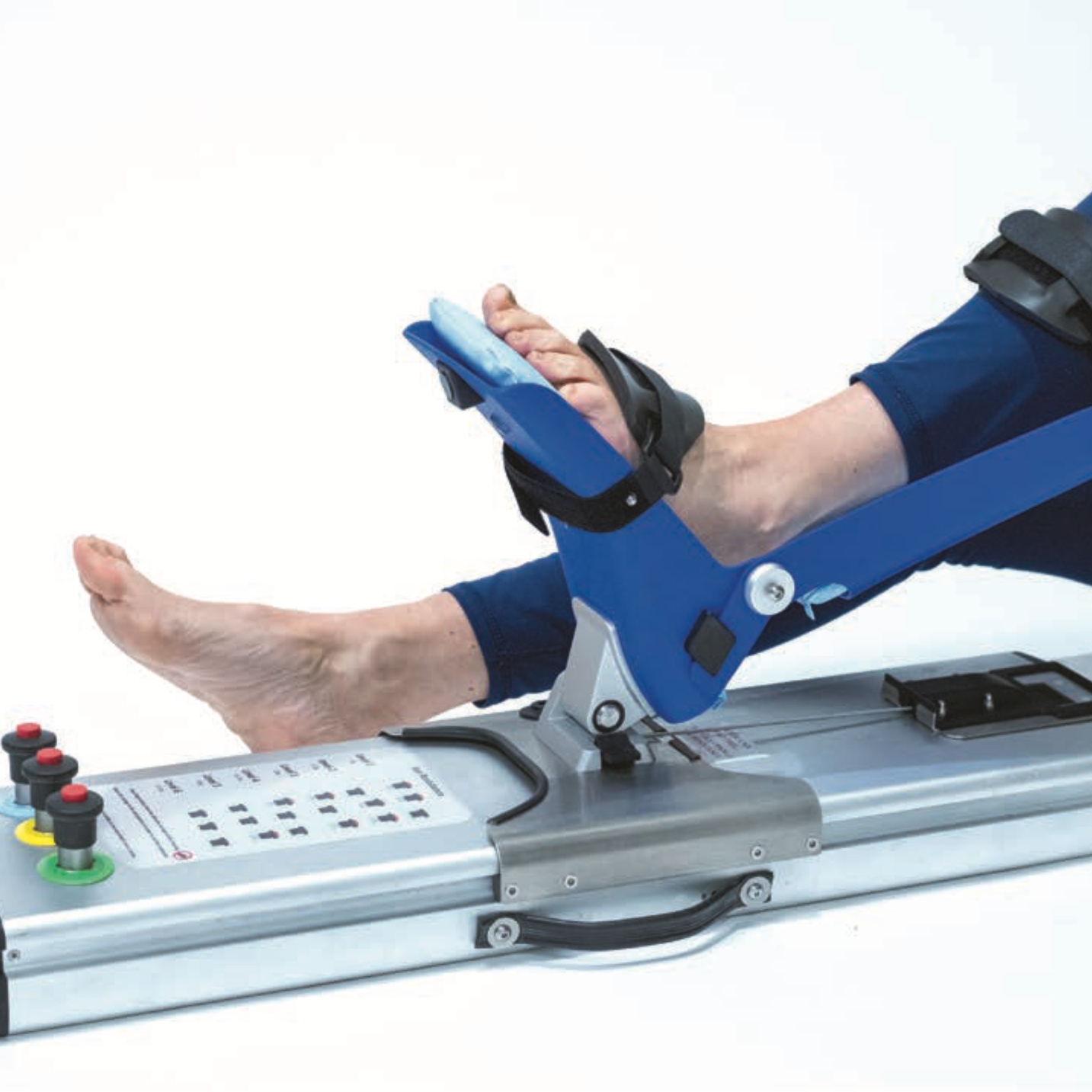
We have supported S-Press in their innovation journey to further evaluate their portable, therapeutic-level leg-strengthening device, used in hospital based exercise and rehabilitation.

We worked with the innovator to offer guidance on which metrics to use to evaluate the success of use in the NHS and to carry out a benefits mapping workshop to identify potential benefits and drawbacks as well as mitigating factors.

Polypharmacy – Getting the balance right

Supporting healthcare professionals to identify patients at potential risk and facilitate better conversations about medicines

Locally, we are implementing a Health Innovation Network-wide polypharmacy programme. Polypharmacy is when people are prescribed many different medicines for one or more health conditions; this can lead to unintended consequences.

We ran five community of practice sessions focusing on topics such as polypharmacy and mental health; and polypharmacy in care homes – with over 180 attendees.

Approximately 30 East Midlands delegates attended webinars on using data to identify patients who may benefit from being invited for a Structured Medication review.

More than 100 delegates (pharmacists, nurse specialists and GPs) attended the action learning sets (ALS) to help them have better conversations with patients about stopping medicines. We funded training for six people to enable them to run more sessions so more colleagues can benefit.

A Nottingham PCN increased their uptake of SMRs by 87% by using the campaign’s translated materials. Watch how they did it.

Living Well With Pain

Improving the outcomes of patients by improving the management of chronic non cancer pain by reducing harm from opioids

As part of our Medicines Safety Improvement Programme led by NHS England, we worked with Joined Up Care Derbyshire (JUCD) ICS to implement the whole systems approach to high-risk opioid prescribing change package.

The number of patients prescribed opioids for more than three months duration and those receiving high dose opioids have both reduced in the ICSs we are working with – before the programme started, they were seeing a year-on-year increase.

70 stakeholders registered for an online event to shape the work undertaken by Joined up Care Derbyshire with our support.

From a small start of one pain support programme in JUCD, there are now eight well-established and still growing groups – with another planned for 2024-2025. The groups take place in local venues and use existing workforce capacity more effectively across the county.

Working with Derby County Community Trust has increased engagement and reach beyond those we could usually contact.

Transforming wound care

Improving care for patients with lower limb wounds

We are supporting the Transforming Wound Care programme to ensure that all patients with lower limb wounds receive the best possible care which leads to:

  • faster healing of wounds
  • improved quality of life for patients
  • reduced likelihood of wound recurrence
  • effective use of health and care resources

In just three months, the LCHS set up the programme team, developed their programme plan, identified the patient caseload, and began training.

A new template for recording patient’s wounds progress, and core metrics such as healing rates and number of patients in strong compression were developed.

Almost 20% of patients treated have been healed within twelve weeks from initial assessment, with many having previously been ‘treated’ for up to two years with no resolution.

The team saved up to 240 hours of clinical time, which frees up staff to assess and treat new patients earlier. If the service can be spread to this patient cohort across the county, there is the potential for releasing over 5,000 hours of clinical time, along with potential cost savings of £1.5m.

Cardiovascular Disease (CVD) prevention

Supporting the health and care system in the prevention and management of cardiovascular disease.

Lipid Management and Familial Hypercholesterolaemia (FH)

194 health professionals accessed HIEM lipid management focussed education resources.

2,128 Inclisiran doses were prescribed in primary care in the East Midlands compared to 488 last year.

Pharmacy-led lipid service

£85.83 saved per patient appointment seen in the pharmacy led lipid clinics at Derby Royal Hospital.

162 Derbyshire clinicians have attended lipid management education sessions as a part of the CLF programme.

Blood Pressure Optimisation

57 Primary Care Networks implemented the Hypertension proactive care framework in at least one of their practices.

136 practices were implementing or had adopted the framework by September 2023, 39 of which were priority practices identified as having the highest levels of health inequalities.

Health Innovation East Midlands have influenced five ICBs with their CVD delivery during 2023-24, which covered 97 PCNs and 181,810 strong with known CVD and on lipid lowering therapy and 801,597 patients with registered hypertension (March 2023).

Addressing inequalities in access to healthcare innovation

The Innovation for Healthcare Inequalities Programme (InHIP) was delivered across all the Health Innovation Networks to help health systems address local healthcare inequalities and improve access to the latest health technologies and medicines.

With our support:

In LLR staff engaged with more than 350 people from local South Asian communities through co-production sessions, events and focus groups to hear their experiences of accessing health care and to understand barriers.

In Lincolnshire, staff were trained to carry out Healthy Heart home visits and to refer appropriate patients to a new virtual Multi Disciplinary Team (vMDT). 37 of the patients seen by the vMDT received changes to their treatment.

In Northamptonshire, Community Champions from eight organisations were trained to carry out the opportunistic testing for Atrial Fibrillation (AF) and Hypertension. 13 screening events were held. 424 people were tested with the identification of potentially 22 with AF, 36 with other cardiac issues and 180 with high or very high blood pressure.

Safer care

The East Midlands Patient Safety Collaborative (EMPSC) was established in 2014, as one of fifteen across England; it is hosted by HIEM.

We work alongside acute hospital trusts, community services, primary care, Integrated Care Systems (ICSs), care homes, and local authorities in the region on projects designed to improve patient safety and build quality improvement capacity and capability.

Maternity and neonatal - 865 women giving birth at less than 30 weeks of gestation received magnesium sulphate within the 24 hours prior to birth.

System Safety - EMPSC worked directly with the Midlands Regional Patient Safety Specialist and all 5 ICBs in the East Midlands to support a network of 30 NHS and independent provider organisations to successfully implement the Patient Safety Incident Response Framework (PSIRF) in April 2024.

Mental health - A Mental Health Learning Event attracted 78 people to build skills and knowledge relating to the three community of practice areas of Improving Sexual Safety, Reducing Restrictive Practice and Preventing Suicide and Self-Harm.

Supporting our care sector to keep their residents well

Identifying deterioration in health early and knowing how to respond

EMPSC is delivering the Managing Deterioration Safety Improvement Programme (ManDetSIP), commissioned by NHS England.

Provided training to 1,576 people from 370 organisations.

A care conference and awards event attracted 200 attendees and 35 exhibitors. This year the awards were opened to domiciliary care as well as to care homes, as the programme’s reach extended.

Working with The University of Nottingham Pharmacy School we piloted a project to place students at Ashfields Care Home, Derbyshire to support care home staff to use the managing deterioration tools and learn about medicines management in care homes. The pilot will expand to place 200 students in East Midlands care homes from September 2024.

Participants identified the following benefits of the SBARD training: increased staff confidence and job satisfaction, reduction in incidents and ambulance call outs, more residents able to stay in their preferred place of care.

In one care home – the increase in staff confidence led to a member of staff identifying a resident whose health was deteriorating. The resident went on to be diagnosed with sepsis and survived thanks to early intervention.

Sustaining improvements in ADHD diagnosis

Following the end of the three-year Focus ADHD national programme in March 2023, adoption of the objective assessment technology QbTest has continued to accelerate across NHS healthcare providers.

Our expert
support services

Providing expert support

Managing a portfolio of transformative programmes and technologies is just one aspect of our work. We also provide expert support services for ICSs, cross-sector partners, and commercial clinical innovators.

Many services we provide are free of charge; for more bespoke support we take on funded commissions.

Our services include:

Igniting innovation

Service transformation

  • Finding innovative solutions to your specific challenges
  • Access proven innovations
  • Service pathway mapping and redesign
  • Project management
  • Medicines management
  • Patient and Public Involvement
  • Health inequalities / Core20+5
  • Communities of Practice
  • Cross system facilitation and brokering

Data, analytics and evaluation

Insight & evidence

  • Real world evidence
  • Evaluation
  • Data analysis & presentation
  • Business case development
  • Benefits realisation
  • Budget impact model
  • Health economics
  • Process mapping
  • NHS NetZero

Organisational development

Building your team

  • Quality improvement
  • Change management
  • Human Factors
  • Embed and sustain transformation
  • Safety culture
  • Appreciative inquiry
  • Organisational training and events
  • Workforce transformation
  • Clinical entrepreneurship
  • Stakeholder mapping

We have covered some of our support services in more detail later in this report:

  • Patient and Public Involvement, equality, diversity, and inclusion - access to networks, toolkits and training.
  • Patient safety - Managing Deterioration training for health and care systems.
  • Quality Improvement methodology and expertise around communities of practice.
  • Cross system facilitation and brokering – enabled by recruiting Innovation Leads across the region’s health systems.

Providing expert commercial support for innovators

We support innovators – from a clinical or a commercial background – through every step of their innovation journey.

Early-stage support can help innovators to develop their idea, develop business plans and review potential markets and benefits. As the innovation takes shape, we can advise and signpost to support on regulations, funding, marketing and testing the products for example.

Our support is underpinned by a number of established programmes, networks and processes that we have developed ourselves, along with national initiatives we deliver locally on behalf of NHS England.

These local and national initiatives include:

Case Study

TrueView is an independent start up set up by a spinal surgeon from Guy’s and St Thomas’ Hospital. TrueView contacted us for support developing their product - a digital device to be used in spinal surgery to provide the surgical team with real time feedback about the integrity of the pedicle channel prior to screw insertion.

Pedicle screws are the key component in addressing pathologies of the spine. However, incorrect placement of pedicle screws, specifically, breaches of the pedicle can lead to vascular complications, paralysis or death.

Trueview's innovation allows surgeons to quickly and reliably identify breaches of the pedicle before screw placement, preventing injury to patients and resulting in cost savings to the NHS.

TrueView have benefited from Health Innovation East Midland’s commercial expertise and have participated in our Pre-Accelerator programme and follow on Accelerator programmes to further their customer discovery and development of a robust value proposition.

We have most recently supported the TrueView team in their bid resulting in an £800k Innovate UK grant, allowing them to create 2.5 jobs to expand their team, develop their product and work towards regulatory approval.

TrueView accessed our innovator support offers at all three levels of development – universal support freely available to all; enhanced support for products that meet eligibility requirements as well as our more bespoke distinctive support, provided by our Ignite team.

We were successful in our grant application for Biomedical Catalyst Funding. We want to say a huge thank you to Health Innovation East Midlands for helping us navigate the process. We’re all excited for what comes next, but we wouldn’t be here if it weren’t for the help of folks like yourself, so thank you!

TrueView Medical

Our innovator support
programmes

Since 2013, we have accumulated extensive expertise, which we use to assist health companies and clinical entrepreneurs in implementing their innovations.

We offer guidance, from conceptualisation to the successful launch and dissemination of their ideas within our health and care systems.

By bridging the gap between the NHS and health companies or clinical entrepreneurs, we improve patient outcomes, increase NHS efficiency and stimulate economic growth.

Annually, we draw millions of pounds in investment to our region by helping innovators penetrate new markets, enabling them to expand their businesses and establish or secure jobs.

East Midlands Digital Health Accelerator (EMDHA)

Our EMDHA programme offers specialised support for digital health companies, including tailored expert guidance, coaching, masterclasses, and opportunities to present their products to NHS decision-makers.

In January 2024, we welcomed five new innovators to the EMDHA, while our previous cohort became part of our alumni network.

This year’s programme sought innovations that would help the NHS support self-care in the community and/or tackle waiting lists, while addressing digital inclusion and accessibility.

Our 2024 participants include Strata Health, Janamapp, SiSU Health and Tellmi.

Innovation Academy

The Academy has 647 members and has held 10 live Ask the Expert sessions.

This year, we have re-launched our free Innovation Academy on a new platform - with new on-demand training modules and resources relating to topics along the innovation pathway.

These resources equip participants with the necessary skills and knowledge to disseminate their innovations within the NHS effectively.

The Academy continually updates its content, introducing new modules that are relevant to commercial innovators and to health and care audiences.

Pre-accelerator programme

In addition, HIEM partners with Pioneer Group to provide intensive support to clinical entrepreneurs and healthcare start-ups through the East Midlands Pre-Accelerator Programme which delivers three days of comprehensive support to understand the process of customer discovery to develop a robust value proposition.

A competitive selection process subsequently identifies those participants who will advance to a rigorous 8-week Accelerator programme, which guides them in transforming their ideas into a minimum viable product.

In 2023-2024, 42 companies took part in the pre-accelerator programme – with four companies making successful pitches and moving onto Pioneer’s accelerator programme.

Ignite

Our innovator support team Ignite has brought in £8.2m worth of investment for innovators by providing advice, bid-writing support and bespoke support.

The team also supported Health Innovation Network South London, providing expertise and advice for the Accelerating FemTech programme which included an East Midlands event for innovators focussing on FemTech health solutions to address current challenges.

We also welcomed 15 Australian innovators to the East Midlands as part of Investment NSW (New South Wales) ‘Going Global Export’ Health Innovation Programme.

Health Innovation Fund

Four companies received awards from our 2024 East Midlands Health Innovation Fund to further accelerate health innovations ripe for NHS uptake that will yield benefits for the East Midlands region.

The projects listed below will each receive up to £10,000 to further advance the adoption of their innovation into healthcare system partners:

  • Spirit Digital Ltd (Leicester) partnered with Leicester, Leicestershire, and Rutland (LLR) Integrated Care Board

    Project: Translating the Clinitouch remote patient monitoring platform into additional languages to better serve LLR.

  • Surgery Hero Ltd (London) partnered with Nottingham University Hospitals NHS Trust (NUH)

    Project: Utilising digital prehabilitation and postoperative support to improve the experience and clinical outcomes of those undergoing elective hernia surgery at NUH.

  • SurePulse Medical Ltd (Nottingham) partnered with University Hospitals Dorset NHS Foundation Trust

    Project: SurePulse VS adoption of wireless heart rate assessment technology into routine clinical care in newborn babies.

  • Tissue & Cell Technologies Ltd (Sheffield) partnered with Nottingham University Hospitals NHS Trust

    Project: Financial Benefits of Fat Freezing and Storage for Staged Breast Reconstructions.

Support for
innovators and health & care systems

Patient and Public Involvement and leadership in innovation

We are experts at involving patients and members of the public in the co-design and production of innovation and transformation and strive to ensure our programmes are underpinned by service user input.

Our Patient Public Involvement Senate has supported 24 healthcare, academic, research and innovation organisations.

We continue to escalate patient concerns nationally with a view to influencing action to address improvements.

Our public involvement contact list has increased from 88 members to 146 and continues to grow, enabling us to connect public contributors, including 44 patient leaders to our programmes and healthcare system.

Members have brought invaluable lived experience and insights in areas such as maternity and neonatal, medicine safety and optimisation and polypharmacy, wound care and more.

We facilitated eight focus groups and face to face interviews and surveys engaging 76 patients and public members on their suggestions for CVD prevention, elective surgery pathway, mental health, and falls prevention.

Our Lived Experience Contributors in our Mental Health Safety Improvement Programme are actively involved in three Communities of Practice – suicide prevention, sexual safety and reducing restrictive practice.

Our commitment to addressing Equality, Diversity and Inclusion (EDI) in health and care innovation

Innovation and transformation must be accessible and responsive to our diverse populations, and all our projects are informed by insight into health inequalities across East Midlands’ communities.

Embedding equity in our work - We completed five Equality Analyses and these were reviewed by our Expert People’s Panel, who confirmed and challenged our approach.

A commitment to implementing Diversity Pledges - We continue to make progress and our latest report, the pledges and local action plan showing progress can be found here

Stimulating inclusive innovations across our healthcare systems - Over 250 people registered for our Race Disparity and Inclusive Innovations webinar, featuring Dr Habib Naqvi, Chief Executive at the NHS Race and Health Observatory.

Investing in our staff – We are building staff confidence and capability through webinars and co-delivered Innovation Insight webinars for our healthcare systems.

Evaluation funding and expertise for Integrated Care Systems

We are experts at evaluating the impact of innovation, creating the evidence base that is essential to sustain and spread innovations faster and further, so they benefit more patients.

17 innovations have been supported to be evaluated in real world settings

The evaluation we funded into Breast Pain Pathways informed East Midlands Cancer Alliance work and shaped their national programme to make the Breast Pain Pathway part of the 2024-2025 cancer transformation deliverables.

Data analysis and evaluation to support transformation and decision-making

Our Analytics and Evaluation Service (AES) team are experts in making data and analytics digestible, accessible, and insightful for health and care organisations.

Provided analytics support for six organisations

Developed four cost benefits tools to enable the impacts of innovations to be estimated by local organisations, supporting adoption and spread.

Worked on three independent evaluations and provided analytics support for a further four evaluations

Provided expertise and advice for the Accelerating FemTech programme run by Health Innovation Network South London, delivering a budget impact and benefits analysis training workshop and one-to-one coaching sessions

49 analysts benefitted from the 10-day Information Analysts’ Development Programme (27 cohorts over the past 10 years)

Expert support for 16 innovators – including 11 benefits workshops and benefit maps

Provided analytics support to HIEM innovation programmes such as polypharmacy, medicines optimisation and health inequalities

Worked with HDRUK to run a webinar for more than 160 people on Using data to improve care – another event is planned later in 2024.

Supporting your quality improvement activities

Using the Institute for Healthcare Improvement’s Model for Improvement, we help quality improvement collaboratives to form.

These involve groups of professionals coming together, either from within an organisation or across multiple organisations, to learn from and motivate each other to improve the quality of health services.

They often use a structured approach, setting targets and undertaking rapid cycles of change.

Increasing innovation capacity in the region

We supported all five ICSs, the East Midlands Mental Health & Learning Disabilities Alliance and the East Midlands Radiology Consortium (EMRAD) to each recruit an Innovation Lead.

Innovation Leads are delivering a step change in our ability to access intelligence from across the system to support and inform innovation development.

Colleagues are seeking out our support for innovation in their local systems – particularly evaluation, a key contributor to both sustainability and wider spread and adoption.

Intelligence from the Innovation Leads has informed our Innovation Exchange events and there has been an increase in Innovation Scanning activity – both of which identify potential solutions to health system challenges.

We have an increased reach across the systems to highlight innovation opportunities and wider attendance at our development events.

Opportunities to access funding have been identified and support for local innovation accessed that colleagues were previously unaware of.

One hosting ICB has appointed to a permanent Innovation Lead post.

EMRAD’s Innovation Lead, Amaka Ojiako has written a blog capturing her reflections on her first year in post.

Looking forward and
future ambitions

Health innovation is needed like never before – and over the year ahead we will build our support for the East Midlands Integrated Care Systems and their partners, so together we can realise the game-changing potential to transform patient outcomes, enable NHS efficiencies and generate growth in our economy.

We will continue to develop our innovation projects and identify digital and Artificial Intelligence technologies that could provide solutions to local health challenges.

We will also continue to develop our supporting programmes, which include our Digital Health Accelerator Programme and our Innovation Academy. We will continue to embed patient involvement and equality, diversity and inclusion across our work, and support our cross-sector partners to embed these agendas in their activities.

You can find out more information about our work on our website – and for more detail have a look at our Business Plan.

If you would like to know more about the programmes that we are currently supporting, and find out about our supporting services, take a look on our website.

Find out more

Please get in touch to discuss your specific support needs – and to keep up to date with our latest offers, sign up to our newsletters and social media channels.